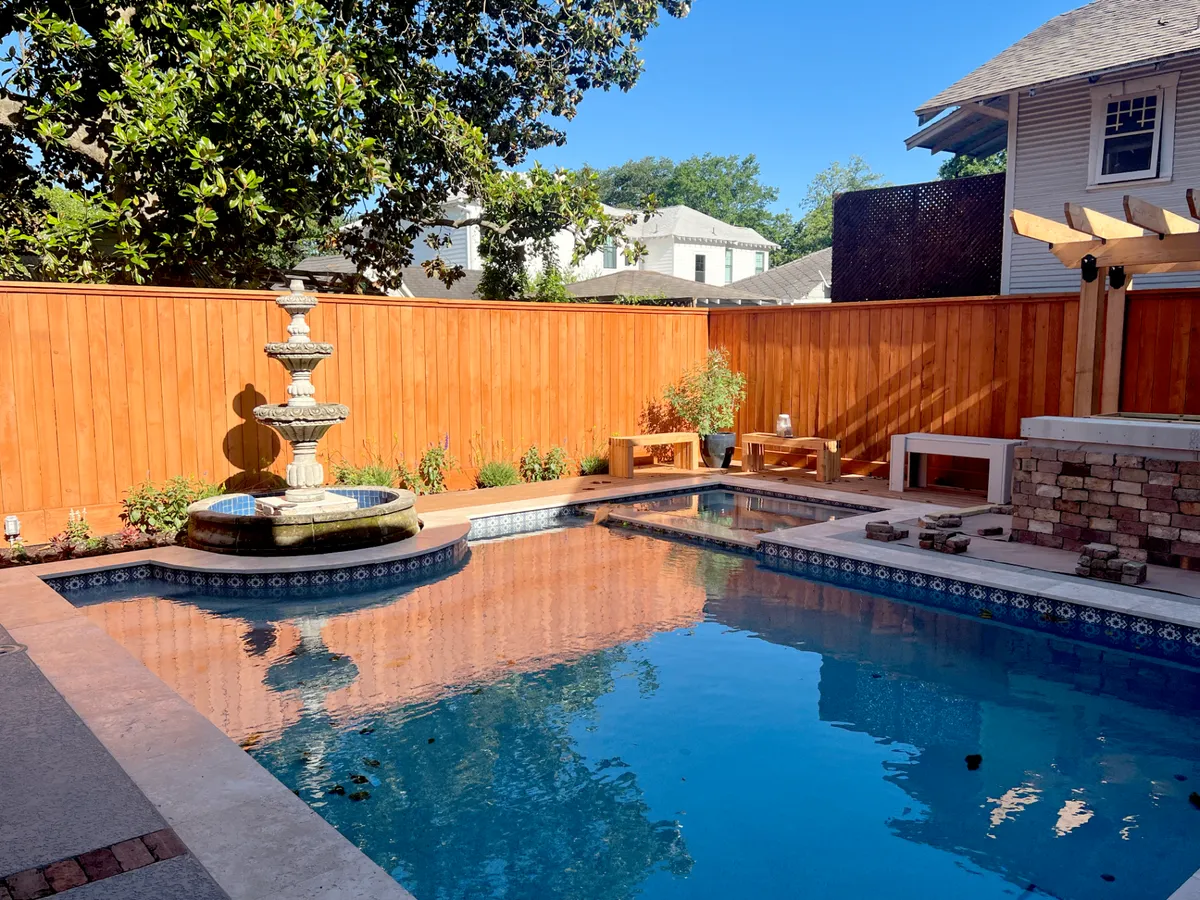
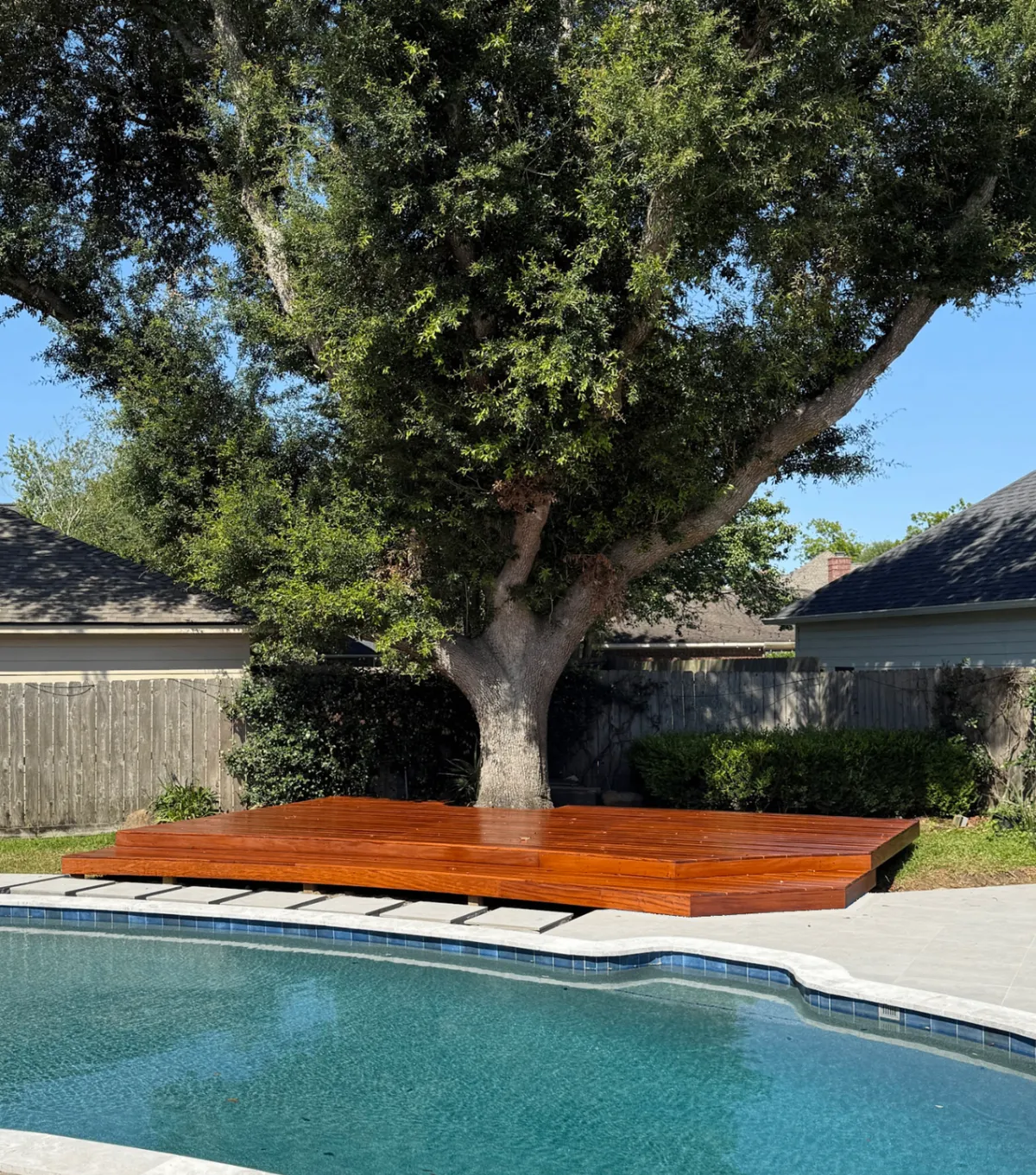
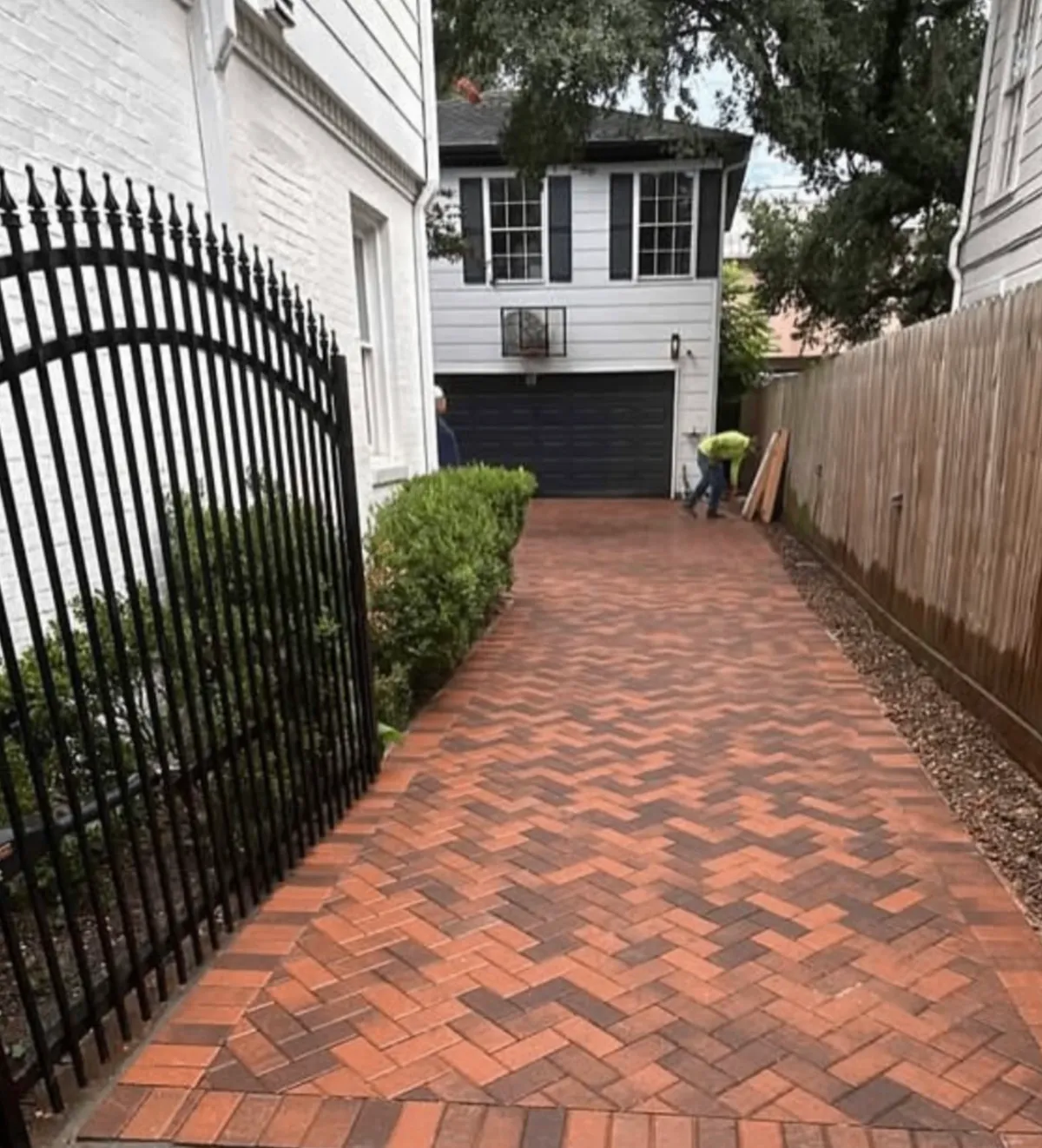
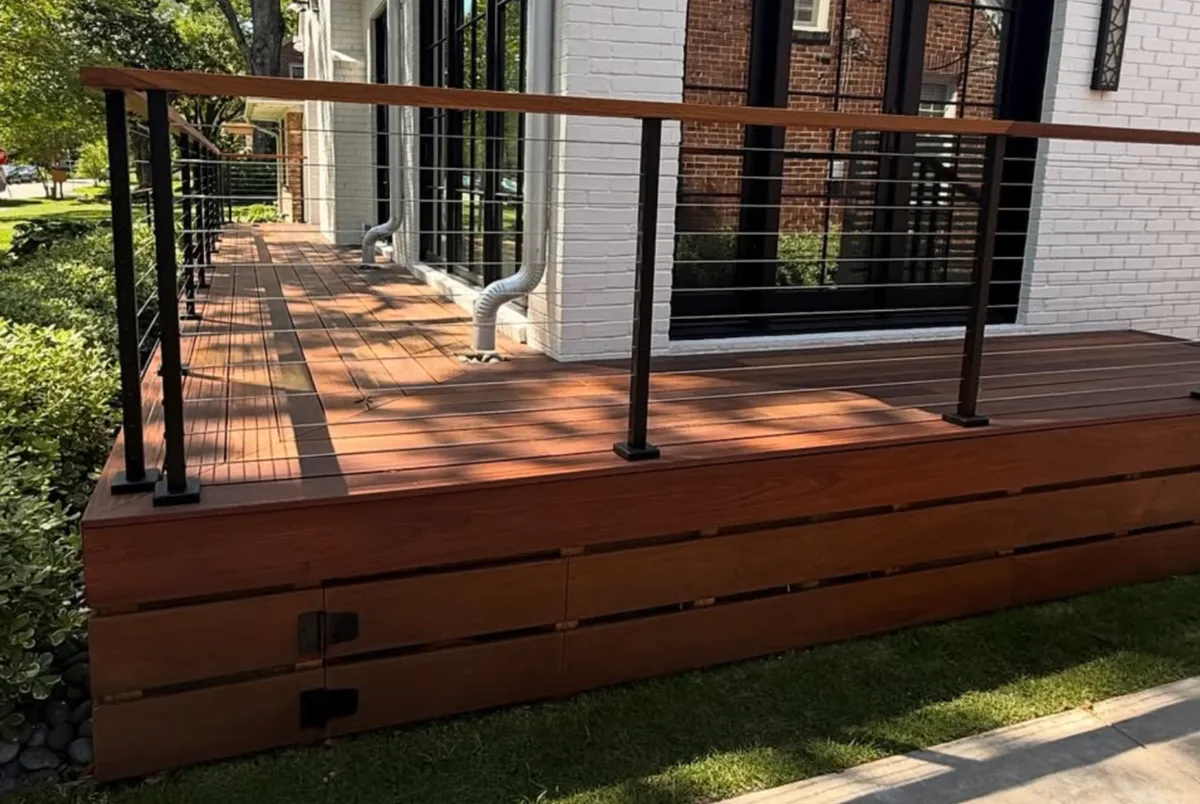
Shade is the whole point of a pergola here. Between roughly May and October, an uncovered Heights patio is unusable from late morning to early evening — so the real question isn't whether to build one, it's which structure and material actually survive Houston heat, humidity and storms on a narrow 1920s lot.
Cedar pergolas
The default choice in the Heights, and the one that reads correctly next to bungalow and Victorian-era architecture. Cedar handles Houston humidity well and takes stain or a natural weathered finish. Plan on re-sealing every few years if you want to hold the color; left alone it silvers.
Cedar pergolas and carportsSteel pergolas
Steel lets you span farther with fewer posts — useful on tight lots where every square foot of patio counts, and where a post in the middle of a 12-foot side yard is a non-starter. Powder-coated finishes hold up in humidity with far less upkeep than wood.
Heights pergola detailsFixed shade and solid covers
When you want rain protection and not just shade, a solid-roof patio cover or attached structure is the honest answer. It changes the drainage picture — the roof concentrates water, so gutters and a routed outlet get designed with the structure, not after it.
Patio covers in HoustonLouvered and motorized/retractable systems
Adjustable louvered roofs and retractable shade let you take full sun in January and close things down in August. They're the priciest option and they add moving parts, motors and wiring to maintain — worth it for patios you use year-round, overkill for a small side-yard sitting area.
All structure optionsSun, heat and orientation. Where the structure sits matters as much as what it's made of. A west-facing Heights patio takes the worst of the afternoon load, and open-slat pergolas give partial shade at best in that exposure — that's where louvers, a solid roof, or added shade fabric earn their cost. Louver spacing, beam depth and orientation all get set against the specific patio, not from a catalog.
Rain and drainage. Any covered structure changes where water goes. Posts get set on footings that keep wood clear of the soil, and roof runoff is routed away from the house and the slab rather than dumped at the patio edge. On Heights lots with clay soil and shallow street drainage, that detail is the difference between a dry patio and a chronic wet spot — see how we handle Heights backyard drainage on clay soil.
Wind, load and footings. Houston sits in a coastal wind zone, and a pergola or patio cover is a sail if it isn't anchored properly. Post size, footing depth and connection hardware are sized for the structure's span and exposure, and larger or attached structures may warrant engineered drawings. Houston clay's shrink–swell behavior is the reason footings here go deeper than a catalog kit assumes.
Lot constraints, setbacks and review. Heights lots are narrow, often with alleys, mature pecans and detached garages competing for the same footprint. Setbacks and impervious-cover limits shape the size before aesthetics enter the conversation, and properties inside the Heights historic districts go through Houston Archaeological and Historical Commission review for visible exterior work. Requirements vary by district and by where the structure sits on the lot, so we confirm what applies to your address rather than assume. Our project sequence guide shows where review lands in the timeline.
Maintenance and lifespan. Humidity is the deciding factor over ten years. Cedar wants periodic cleaning and re-sealing; powder-coated steel and aluminum want washing and hardware checks; motorized systems add motors, tracks and fabric to the maintenance list. The materials comparison lays out the tradeoffs side by side, and the Heights materials strip above covers what we've actually specified on these streets.