
Garden Oaks · Decks
Garden Oaks Deck Remodeling and New Decks
Facing tired boards, a bouncy section or worn stairs? The right answer depends on what is underneath, so we start with an in-person inspection rather than a surface price.
Repair, resurface, rebuild or new
We cannot judge a deck's safety from photos. A site visit narrows the options; anything structural is decided on what we find in person.
| Option | What changes | When it fits |
|---|---|---|
| Repair | Isolated boards, a stair tread, loose rail or a few joists | Framing and footings are sound; damage is local |
| Resurface | New decking and rail on the existing frame | Frame is sound and spaced for the new boards |
| Rebuild | New framing and footings, often on the same footprint | Rot, settlement or a ledger problem under the surface |
| New deck | Fresh layout, height and stairs | No deck yet, or the old shape no longer suits the yard |
Design details that matter here
Stairs, rails & grade
We measure the actual grade and finished height at each edge; stair count, landing size and where a rail is needed follow from those numbers.
Root space
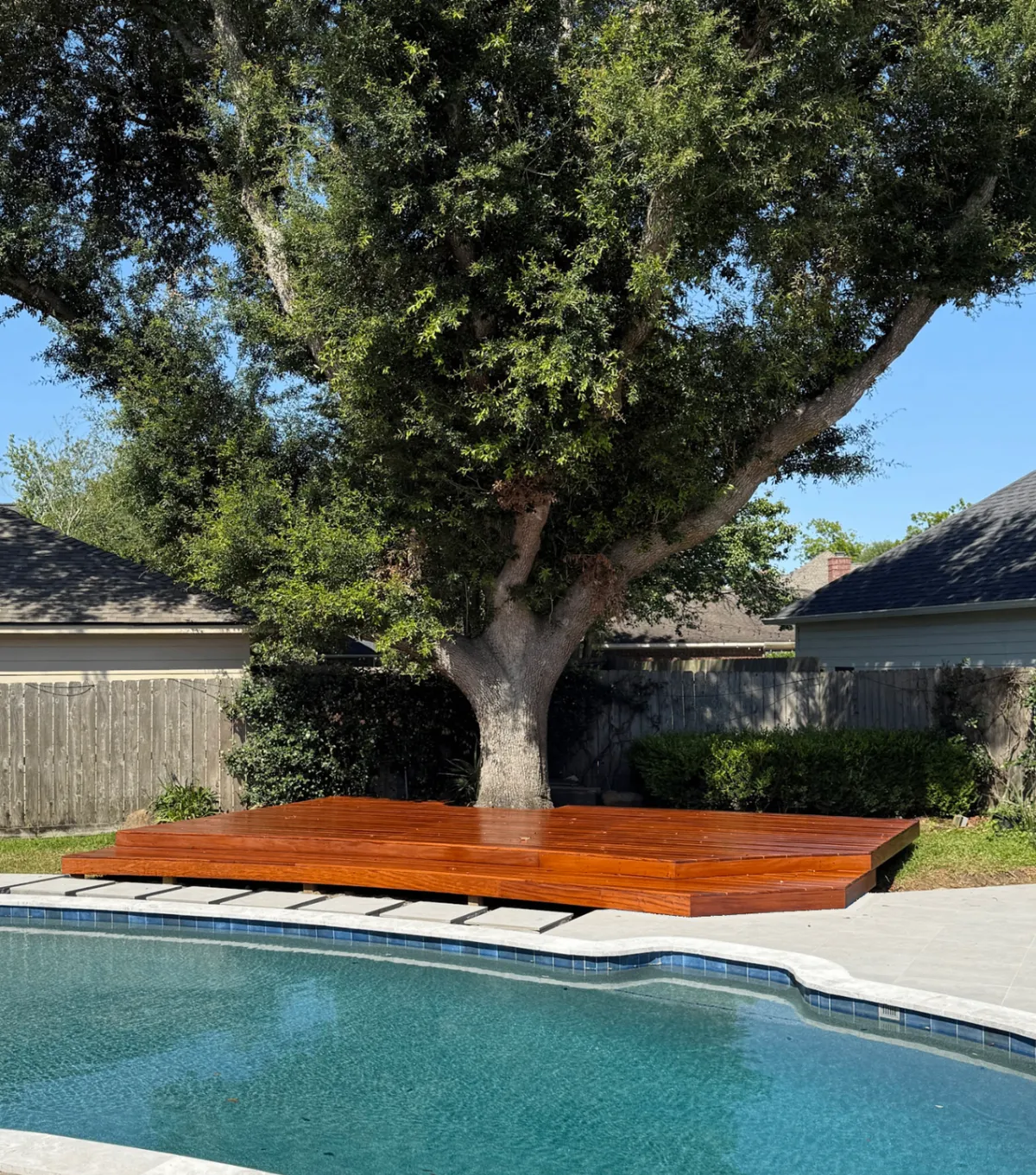
Footing spots are chosen around roots, and sometimes the deck shape changes to suit a tree. That is a site-review question, not a fixed setback.
Airflow & water
Low decks in shade dry slowly. Ventilated skirting, gaps between boards, and grade that carries water away from the frame all help.
Access
How lumber reaches the back yard affects schedule and how much of the lawn and beds get crossed.
Hardwood or composite under heavy canopy
| Hardwood (ipe, garapa and similar) | Composite | |
|---|---|---|
| Look | Natural grain; greys unless re-oiled | Consistent colour; range depends on line |
| Upkeep | Periodic cleaning and oil if you want the colour | Cleaning; less finish work |
| Wet leaves & needles | Clear regularly so boards can dry | Clear regularly; damp debris can stain or grow mildew |
| Heat in sun | Varies by species | Darker boards run hotter |
| Framing | Needs suitable joist spacing | Follow the maker's spacing and gap rules |
Budget and cost drivers
Our budget tool uses $50 per square foot for hardwood decking (materials and labor). A 12×16 ft deck is 192 sq ft, or $9,600 as an illustrative planning amount. That is the hardwood scope only — it is not a composite price or a quote.
- Demolition and haul-off of an existing deck
- Footing count and depth, and working around roots
- Height, stairs and railing length
- Board species or composite line
- Access to the back yard
How a deck project runs
Call and photos
Tell us what is failing and send a few photos by email; we set a visit.
Site visit
We check framing, footings, ledger, stairs, grade and trees we can see.
Written scope
Repair, resurface or rebuild, with materials and line items.
Build
Demo, framing, decking, stairs and rail, then a walkthrough.
Examples and references
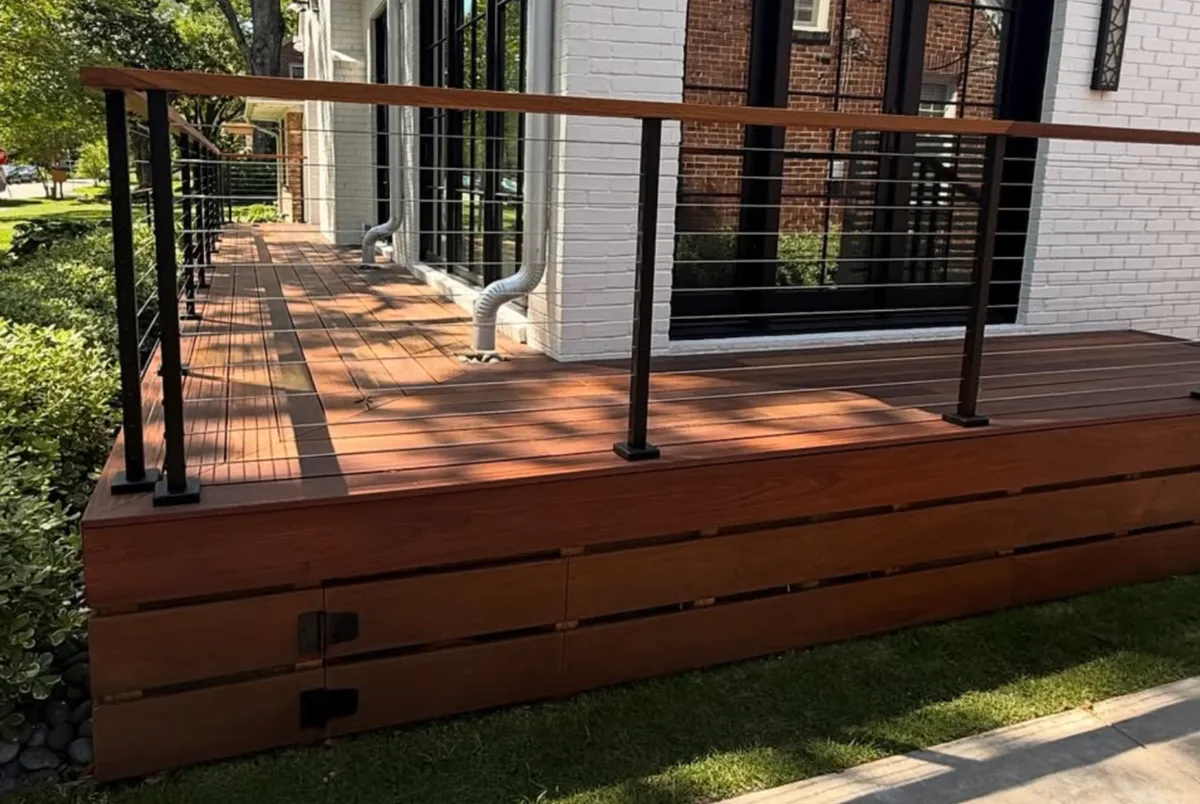
Examples shown were built in West University and elsewhere in Houston, not Garden Oaks.
Questions
- Can you tell me if my deck is safe from photos?
- No. Photos help us plan the visit, but structure has to be checked in person.
- Can I just replace the boards?
- Sometimes. Resurfacing works when the frame is sound and spaced for the new boards. If joists or footings are failing, new boards will not fix it.
- Is the budget tool figure a composite price?
- No. The tool's deck rate is $50/sq ft for hardwood. Composite is priced on a site-specific quote.
- Will a deck hurt my tree?
- Any digging near roots carries some risk. We place footings to limit it and recommend an arborist when a significant tree is close.