Pavers · Houston Heights & Greater Heights

    Paver Patios & Walkways in the Houston Heights

    Concrete, clay brick and natural stone surfaces built on a proper base, with edges that stay put and water that drains where it should.

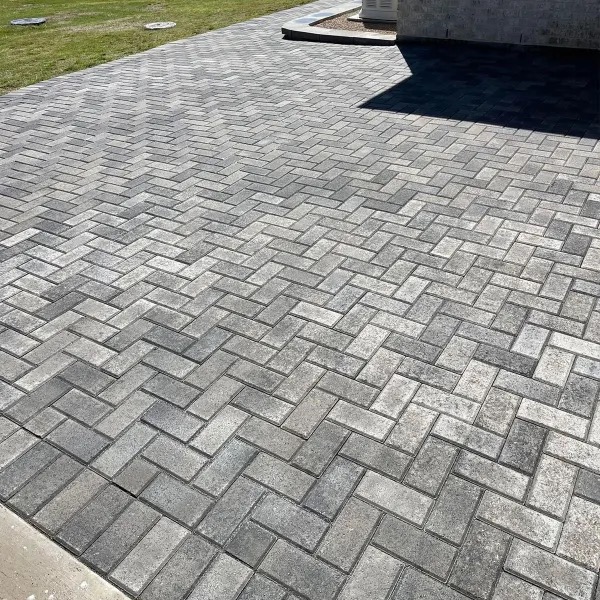
    Grey concrete paver field in a herringbone pattern installed by Right Angle Home & Outdoors in the Houston Heights
    Houston HeightsCommercial paver project — tumbled grey pavers in a herringbone field running to a lawn edge.

    A paver surface is mostly what you do not see: excavation, a compacted base, a separation fabric where the soil calls for it, and an edge restraint that keeps the field from spreading. Heights clay moves with the seasons, so a thin base or a missing edge shows up as sunken corners and widening joints within a few years.

    This page covers conventional paver surfaces — patios, walks, side drives and pool surrounds where the goal is a durable, good-looking surface that sheds water to a planned outlet. If the goal is to let water soak through the surface, that is a different assembly, covered on our Heights permeable pavers page.

    Choosing a paver surface

    Concrete pavers

    The widest range of shapes and colors, consistent sizing and a good price for large fields. Tumbled finishes soften the look for older houses.

    Clay brick

    A natural fit for Heights brick and bungalow architecture. Herringbone and basketweave patterns with a soldier-course border read as traditional.

    Natural stone

    Travertine, limestone and flagstone for patios and pool surrounds. Travertine stays relatively comfortable underfoot in sun.

    Patio, walk or driveway

    A driveway carries vehicle loads and needs a deeper base and suitable paver thickness than a patio or garden walk.

    Work and reference photos

    Photos of our projects, labeled with where they were built. Reference images are marked as such.

    Grey concrete paver field in a herringbone pattern installed by Right Angle Home & Outdoors in the Houston Heights
    Houston HeightsCommercial paver project — tumbled grey pavers in a herringbone field running to a lawn edge.
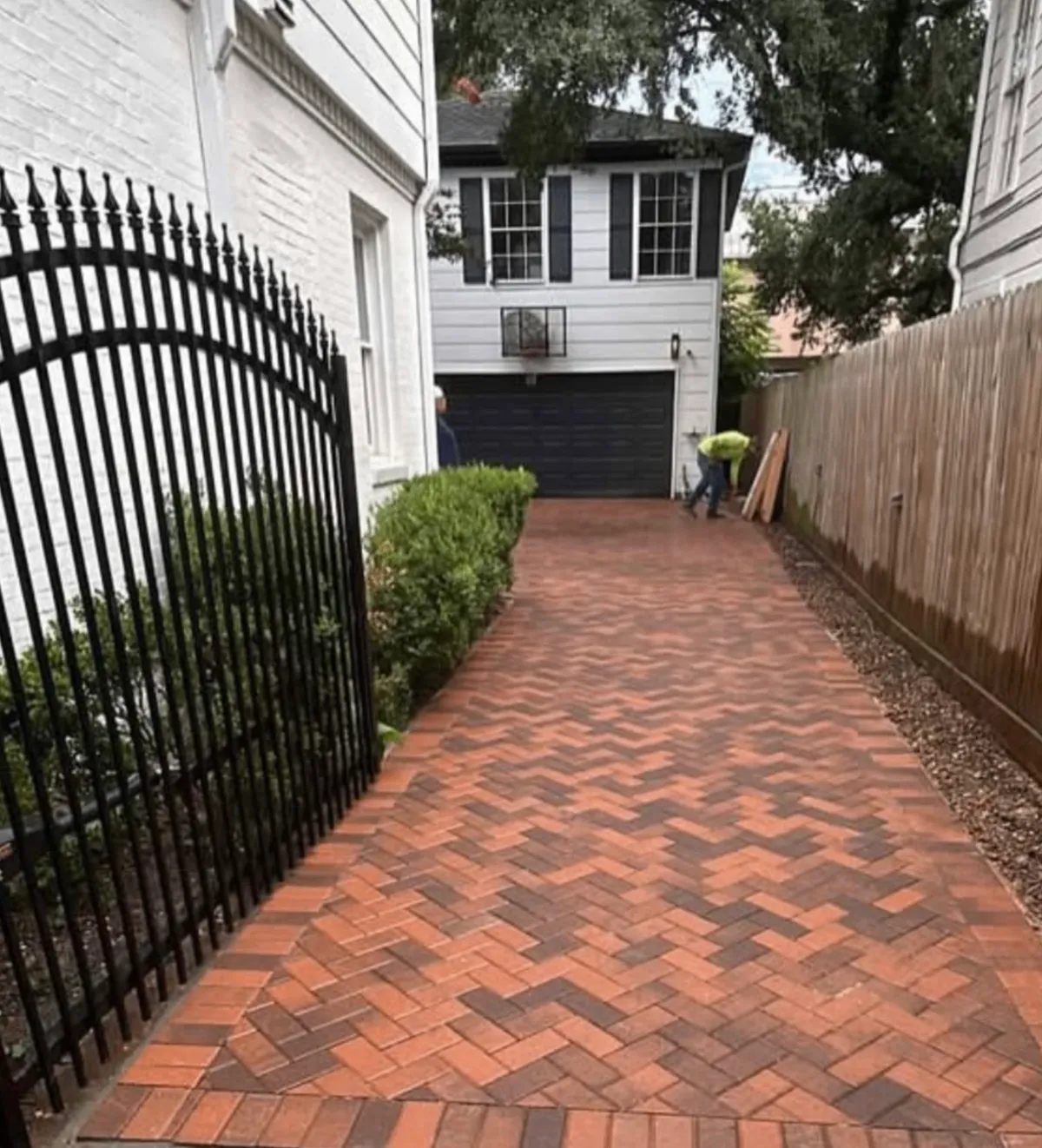
    Clay brick paver side drive in a herringbone field with a soldier-course border and a gravel strip along the fence, by Right Angle Home & Outdoors in West University
    West UniversityClay brick side drive with a soldier-course border and a gravel strip along the fence line.
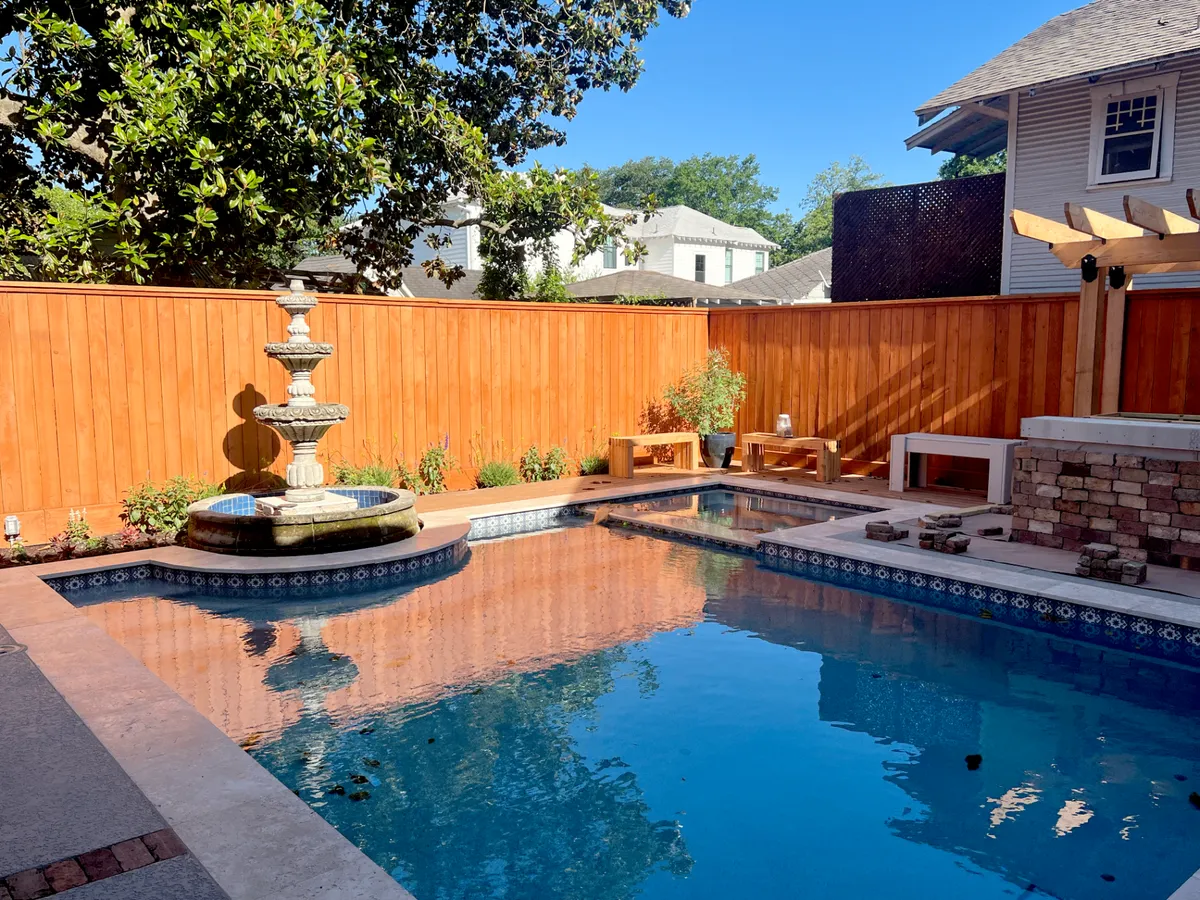
    Houston Heights backyard by Right Angle Home & Outdoors with a tiled pool and spa, travertine coping, vertical cedar privacy fence, brick outdoor counter and a pergola
    Houston HeightsPool surround, cedar privacy fence, brick counter and pergola in one backyard.

    See documented projects and field notes

    Paver surfaces compared

    Concrete paversClay brickTravertine / natural stone
    LookModern to tumbled-traditionalClassic, period-appropriateNatural variation
    Color over timeCan fade slightly in sunColor is through the clayStable; sealing optional
    Heat underfootVaries with colorVaries with colorTravertine is often cooler
    RepairsIndividual units lift and relaySameSame; matching stone can vary
    Vehicle useYes, with suitable thickness and baseYes, with paving-grade brickDepends on thickness

    What drives the budget

    We price from a site visit rather than a square-foot number. These are the factors that move the figure most. Try the budget tool for an illustrative amount at our standard rates.

    Excavation and haul-off

    Removing old concrete or soil and hauling it out through a narrow lot is a real cost.

    Base depth

    Driveways need more base than patios; poor soil needs more again.

    Material and pattern

    Natural stone and complex patterns with many cuts cost more than straight concrete fields.

    Edges, steps and borders

    Soldier courses, steps, curved edges and transitions add labor.

    Drainage

    Getting water to a legal outlet may mean drains, a dry well, or regrading next to the surface.

    Planning on a Heights lot

    Grade on a flat lot

    Heights lots are often nearly flat, so the surface needs deliberate fall away from the house to a planned outlet.

    Edge restraint

    Every field needs a restraint — concrete, a buried edge or a soldier course set in a footing — or it will spread.

    Access

    Machine access may be limited to a narrow gate or none, which affects excavation method and schedule.

    Trees

    Excavating for base near large roots needs care; sometimes a raised or permeable approach is better.

    How the project runs

    1. 01

      Site visit and levels

      Measure existing elevations and decide where water goes.

    2. 02

      Design and material

      Layout, pattern, paver choice and edge details.

    3. 03

      Excavation

      Remove existing surface and soil to the planned depth.

    4. 04

      Base and edges

      Install and compact base in lifts; set edge restraints.

    5. 05

      Laying and cutting

      Bedding layer, pavers, cuts and borders.

    6. 06

      Joints and compaction

      Fill joints, compact, and walk through care.

    Projects are led by principals Omar Afra and Pedro Salazar.

    Common questions

    Why do paver patios sink or spread?

    Usually because the base was too thin or poorly compacted, there was no separation fabric over soft clay, or the edge restraint was missing or weak. Fixing it means lifting the pavers and rebuilding the base, which is why we spend most of our effort there.

    Are pavers better than poured concrete?

    They cost more up front but can be lifted and relaid for repairs or utility work, and they handle soil movement with less visible cracking. Concrete is cheaper for simple slabs. Our pavers vs. concrete guide compares them in more detail.

    Do regular pavers let water through?

    Not meaningfully. A standard paver field sheds water like any hard surface, so it needs fall and an outlet. If you want water to soak through, that is a permeable assembly with a different base.

    Can pavers go near a big tree?

    Sometimes, with shallow excavation and a layout that keeps away from major roots. In some cases a permeable or raised surface is the better choice.

    Decisions to make early

    Right Angle Home & Outdoors clay brick paver driveway in Houston, laid in a herringbone field with a soldier-course border between a wrought iron fence and a wood fence with a gravel drainage strip
    Right Angle work · West University, Houston. Field record

    Standard pavers, a permeable assembly, or a drainage fix

    Standard pavers
    A durable surface on a compacted base. Water runs off the surface and must be graded away from the house.
    Permeable assembly
    Open joints over a deep open-graded stone base with an outlet. Performance depends on the site design, the soil and maintenance; it is not a flood cure.
    Drainage first
    If water already stands or reaches the slab, grading, downspout routing or a drain line may be the real fix, with any surface afterward.

    Talk through your project

    A site visit is the fastest way to a real scope and number.