
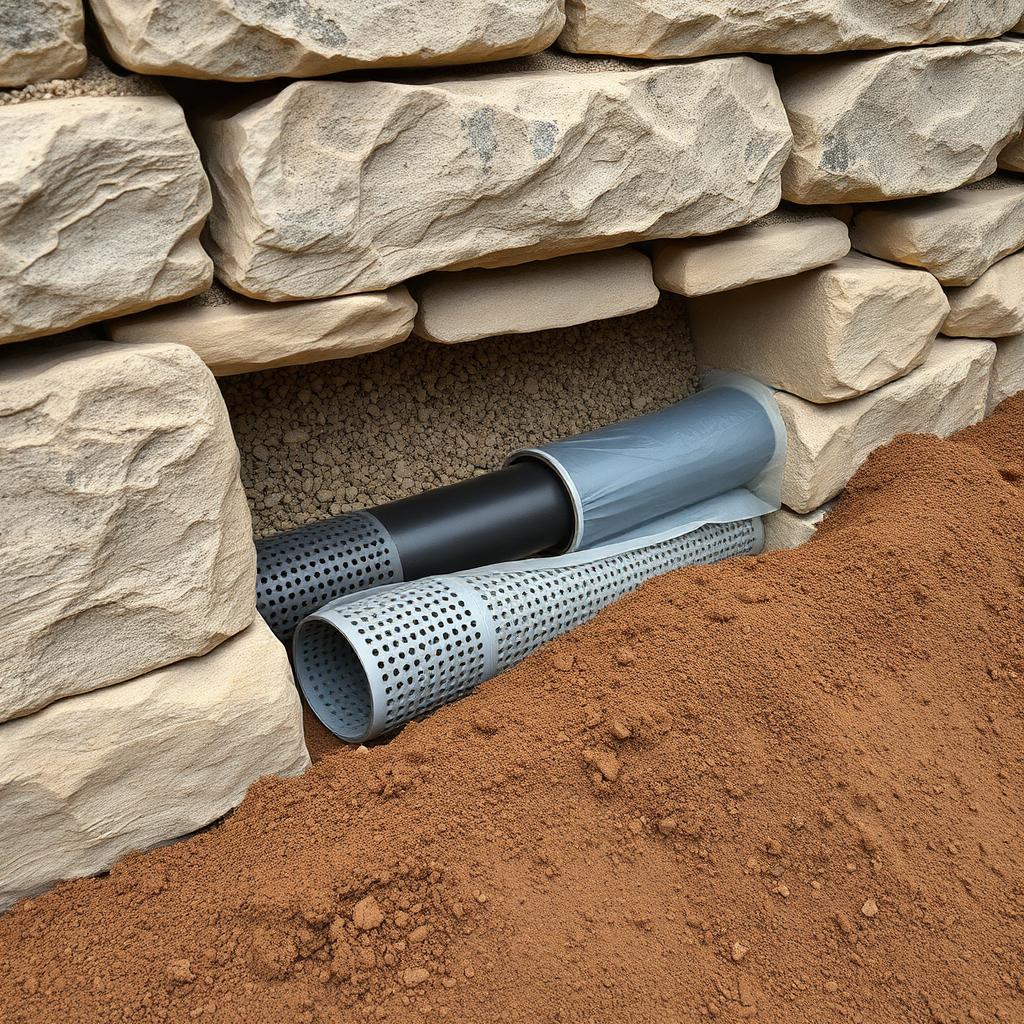
How Proper Drainage Behind Retaining Walls Prevents Flood Damage Near Buffalo Bayou
The number one reason retaining walls fail in Houston isn't poor materials or bad block alignment. It's water. Specifically, water that builds up behind the wall with nowhere to go.
Near Buffalo Bayou—where the water table rises fast and storms dump inches of rain in hours—this failure mode is accelerated dramatically. At Right Angle Home & Outdoors, drainage design is the foundation of every retaining wall system we build.
Why Drainage Is the Most Critical Component
When it rains, water saturates the soil behind a retaining wall. That saturated soil becomes heavier and exerts lateral pressure—called hydrostatic pressure—against the wall face. Without a way to relieve that pressure, even well-built walls will bow, crack, and eventually collapse.
In the Buffalo Bayou corridor, where properties in 77024 and 77079 can receive 6+ inches of rain in a single storm event, the volume of water pushing against a retaining wall is enormous. Walls built without drainage systems behind them are essentially dams waiting to fail.
The Anatomy of a Properly Drained Retaining Wall
Every retaining wall Right Angle builds in Memorial and along Buffalo Bayou includes:
- Drainage aggregate: A 12-inch zone of clean crushed stone directly behind the wall face, from base to cap. This creates a continuous channel for water to flow downward.
- Perforated drain pipe: A 4-inch perforated pipe at the base of the aggregate zone, pitched to daylight or connected to a storm drain. This collects water and moves it away from the wall.
- Filter fabric: Geotextile fabric wrapping the aggregate zone to prevent clay soil from migrating into the drainage layer and clogging it over time.
- Weep holes: Openings at the base of the wall face that allow trapped water to escape directly through the wall.
Without every one of these components, the system is incomplete.
Houston-Specific Drainage Challenges
Houston's Beaumont clay soil is particularly problematic for retaining wall drainage. Clay doesn't drain—it absorbs water and swells. That swelling increases the lateral load against the wall far beyond what dry soil would produce.
During extended wet periods, which Houston experiences regularly from May through October, the soil behind a retaining wall can remain saturated for days. A drainage system designed for occasional rain won't survive Houston's reality. The system must handle sustained saturation.
Connecting Wall Drainage to the Broader System
At Right Angle Home & Outdoors, we don't design retaining wall drainage in isolation. The wall's drainage system connects to the property's overall water management plan—surface grading, French drains, downspout routing, and permeable hardscape systems all work together.
For properties near Buffalo Bayou, where floodplain proximity adds another layer of complexity, this integrated approach is non-negotiable. A retaining wall that drains into a low spot that floods anyway hasn't solved the problem—it's moved it.
How Houston Flash Flooding Affects Retaining Walls
Houston's rain doesn't arrive gradually. It arrives as intense, short-duration bursts that saturate clay soil faster than it can absorb or shed water. That is the specific condition that puts retaining walls under load.
Hydrostatic pressure spikes. During a heavy Houston storm, the soil behind a wall can go from damp to fully saturated within an hour. Saturated backfill is heavier, and standing water behind the wall face adds its own pressure. A wall designed only for dry soil loads is being asked to do something it was never sized for.
Drainage behind the wall is what relieves that load. The purpose of a free-draining zone — clean, open-graded aggregate directly behind the wall face, wrapped in geotextile fabric — is to give water a path straight down instead of a place to sit. That zone feeds a perforated drain pipe at the base, pitched to daylight at a lower grade or tied into a storm outlet, so collected water actually leaves the site. Weep openings through the wall face are a secondary relief path, useful as a backup but not a substitute for the aggregate and pipe.
Clay soil makes the cycle worse. Beaumont clay swells when wet and shrinks when it dries. Over repeated Houston wet–dry cycles, that movement works on footings, joints and backfill, opening voids that fill with water during the next storm. Walls that look fine in year two can start to lean in year six for this reason alone.
Erosion and scour attack the base. Fast-moving surface water at the toe of a wall can carry away the soil that provides bearing and lateral support. In yards that slope toward Buffalo Bayou or White Oak Bayou, that concentrated flow is often the real cause of failure — not the wall's block or stone. The same erosion patterns we see on bayou-adjacent lots show up at the base of walls first.
A retaining wall is not a flood-control structure. This is worth being direct about. A retaining wall holds back soil and manages the water in that soil. It does not hold back regional floodwater, bayou rise or street flooding, and no residential wall should be sold as doing so. What a well-built wall does is keep your grade, your patio and your foundation support from washing out during and after the storm.
Warning signs after a major storm
Walk the wall once the ground has drained and look for:
- New lean, bulge or bow in the wall face that wasn't there before
- Stair-step cracking, opened joints, or blocks pushed out of plane
- Soil washed out at the toe, or exposed footing
- Water still ponding behind the wall days after the rain
- Efflorescence — white mineral deposits — showing where water is moving through the wall
- Settlement, gaps or dropped pavers in the hardscape above the wall
These are symptoms of trapped water, lost support, or both. Some are cosmetic. Movement, exposed footing and persistent ponding are not: those usually mean partial or full reconstruction with drainage rebuilt correctly. For taller walls, walls that have already moved, or walls supporting a driveway, pool deck or structure above, a licensed engineer's review is the appropriate next step before anyone specifies materials.
Questions Houston Homeowners Ask
How do Houston's flash floods impact retaining walls?
Flash flooding saturates the backfill behind a wall much faster than clay soil can drain, which drives up hydrostatic pressure against the wall face. At the same time, fast surface flow can scour soil away from the base of the wall and undercut its support. Walls with a free-draining aggregate zone, a working perforated drain line and a real outlet handle these events; walls backfilled with native clay and no drainage path are the ones that bow, crack and lean afterward.
In Houston's flood-prone zones, are retaining walls helpful?
Yes — for the job they're actually built to do. On lots with grade change in Memorial, along the Buffalo Bayou corridor and in other flood-prone areas, an engineered retaining wall holds soil in place, keeps erosion from working toward foundations and patios, and gives you a place to control and route water deliberately. What it won't do is stop regional or street flooding. The wall is one component of a site water plan that also includes grading and drainage infrastructure and, where it fits, permeable hardscape.
Does my wall need an engineer?
Taller walls, walls supporting a structure, driveway or pool deck, and any wall that has already moved warrant review by a licensed engineer. Short landscape walls on stable grade generally do not. We'll tell you which situation you're in during a site visit rather than guess at it.
Visit our Memorial retaining wall services page for details on how we approach these projects.
Concerned about drainage behind your retaining wall near Buffalo Bayou? Call Right Angle Home & Outdoors at 713-496-2669 for an assessment. We'll identify the problem and design a solution that handles Houston's worst storms.